
What is Change Management?
Change management at the project level is a framework of processes by which stakeholders can be supported and engaged as they adapt to the changes brought on by a project. Stakeholders impacted by change are not limited to project end users and often impacts everyone in an organization irrespective of their role in the project. Since change doesn’t happen in isolation, it is important to have a framework in place to manage it and take a collaborative approach to understand its impact.
“Change Management is both a process and a competency. It follows a repeatable process and uses a holistic set of tools to drive successful change. It is also a set of skills that enables change and creates a strategic capability for increasing organizational effectiveness.”
– An Introduction Guide to Change Management, Prosci
Why is Change Management important?
Change will follow its own path and guiding it in the right direction can help make it work for your project. A normal reaction to any change is resistance or attempts to control the change. By managing change well, you enable people to be more prepared instead of feeling confused or resistant.
Having a solid communications plan and stakeholder management strategy are useful tools for any project but change management extends beyond just a communications plan. It enables you to manage the people side of change as you support different reactions while navigating the changes. Change Management frameworks enable you to prepare, manage and sustain change because how people adopt to the change can impact project outcomes.
When a proper framework is absent, you will most likely need to navigate different viewpoints and opinions based on personal experiences. Without a strategic approach to change management, you leave room for confusion about how to adopt and move forward as one organization.
Who is responsible for Change Management?
In some projects a change manager will work closely with a project manager to design the framework and set change in motion. However, in many projects and with the scope of project management evolving, the project manager does the role of a change manager.
As a project manager, it is important to clearly communicate what is changing and why it is changing and do that in a timely manner. It is equally important to have the tools, training and resources ready for timely change implementation.
Ultimately for change management to be successful, you will need leadership commitment across all levels of the organization. Without top leadership and middle-management support, it will prove to be an uphill ride destined to fail. In addition to leadership support, complex projects might also need support from change agents who can advocate the change to their peers. We have found this to be especially useful when implementing a new system. Having people trained as change agents in the team can make it easier for others to adopt to the new system.
Which Change Management Framework should I choose?
I want to focus on three change management frameworks that I have found most effective for different project scenarios.
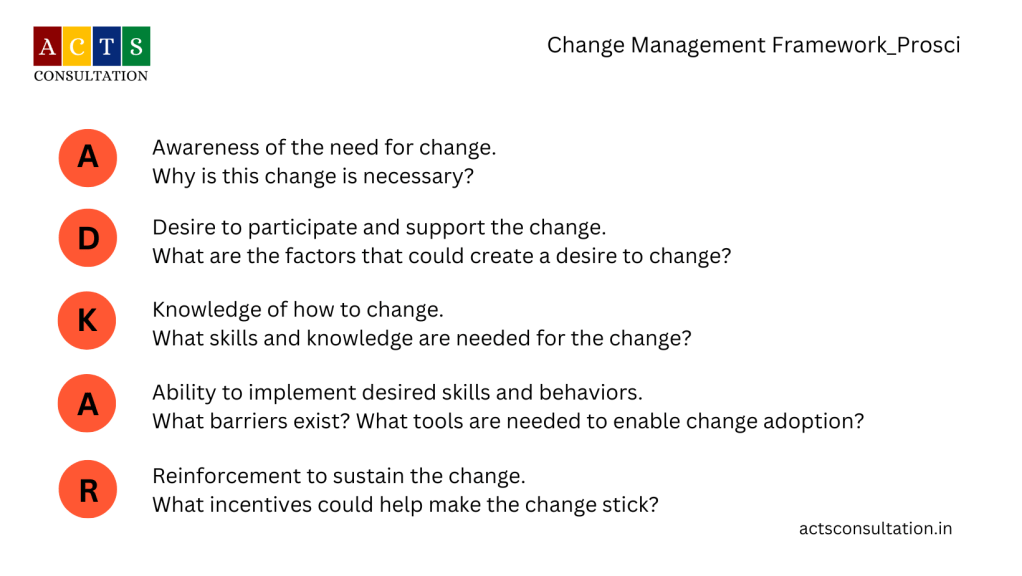
Kotter’s 8-step Change Model: This is a framework that might be the easiest to implement at a project or organization level. However, it doesn’t include scope for employee feedback which is an essential part of change so remember to create touchpoints for feedback throughout the process.
- Create a sense of urgency to inspire people to act with purpose towards the future.
- Build the change team or a guiding coalition to guide and communicate the change.
- Form a strategic vision to clarify where you’re leading.
- Communicate the vision through top leadership and middle management to everyone involved.
- Remove barriers to change to prevent slowing things down.
- Focus on short term wins to track progress and energize your team.
- Maintain momentum as you support your team to embrace change.
- Institute change by articulating the connections between new behaviors and success.
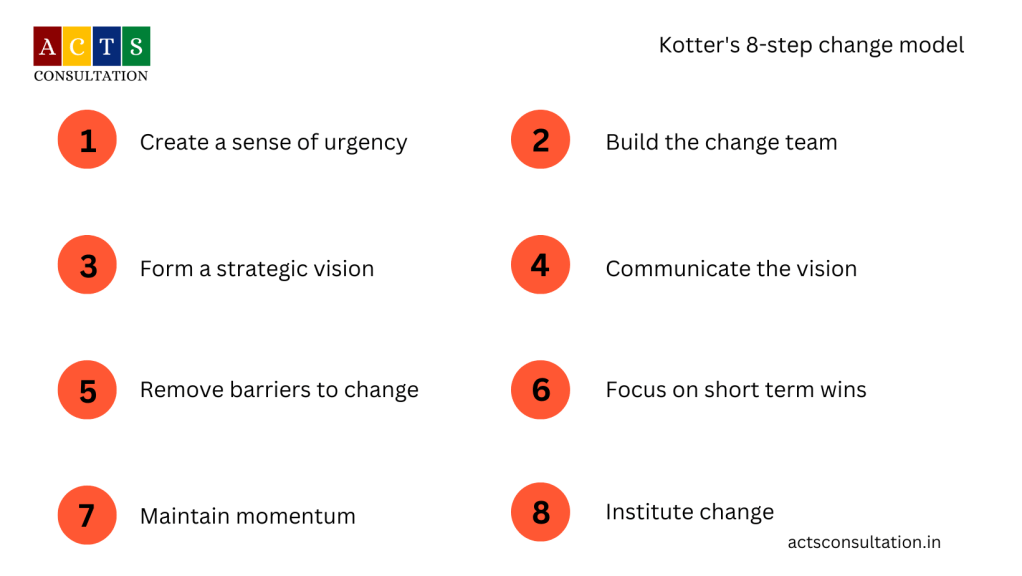
The ADKAR Model by Prosci: An effective change management framework, this model can guide individuals through a particular change and encourage adoption.
- Awareness of the need for change: List the reasons why this change is necessary.
- Desire to participate and support the change: List the factors that could create a desire to change.
- Knowledge of how to change: What skills and knowledge are needed for the change?
- Ability to implement desired skills and behaviors: List any barriers inhibiting their ability to change and identify the skills and knowledge to enable change adoption.
- Reinforcement to sustain the change: What incentives could help make the change stick? Are there incentives to not change that could give rise to workarounds that would defeat the change?
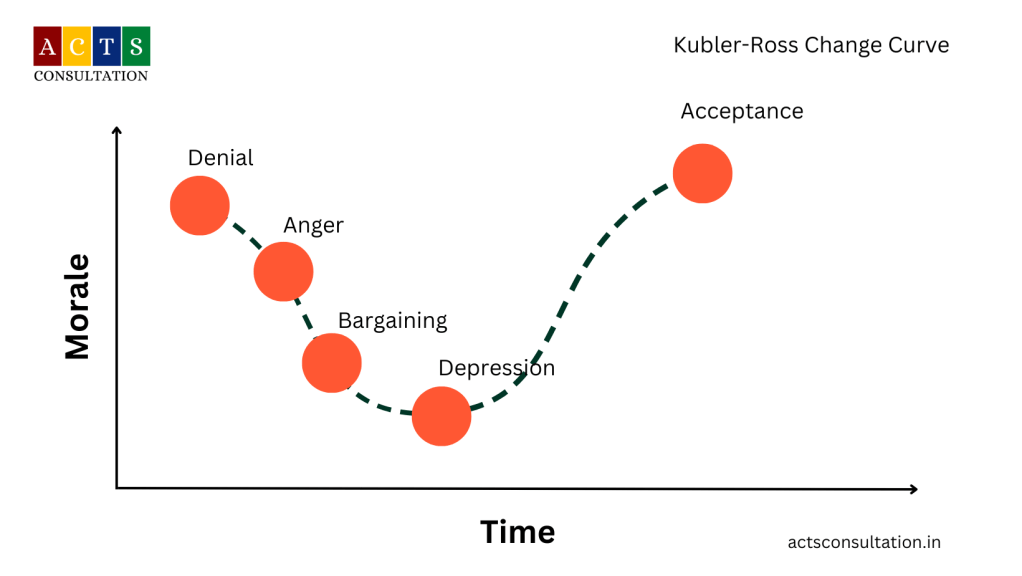
Change Curve by Elisabeth Kübler-Ross: This model allows you to connect with your team on an individual level so it is great for proactively managing change within a small team when the project impact is big. This model was originally developed to explain the grieving process but its application extends to overall change management. People don’t typically go through the stages in a particular sequence and different people dwell in the different stages for varying lengths of time. But knowing the signs enables you to engage and communicate with your team as you navigate the change amidst unpredictable emotions and get to acceptance sooner.
- Person in denial – Allow time to adjust and provide timely and purposeful communication.
- Person experiencing anger – Listen, address concerns with empathy, and remain consistent in your communication.
- Person bargaining – Continue listening and address concerns with empathy. This is when your team is trying to find a compromise.
- Person in depression – Find ways to motivate your team and give them time and space to overcome this stage.
- Person in acceptance – Celebrate success with your team as they accept the change and explore the opportunities.
For Change management to be successful, engage and support those who are directly and indirectly effected by the change. At a project level, it’s a structured and systematic approach but it’s also a personal approach where managers can extend additional support to their teams as needed during the change process.
References:
https://www.prosci.com/change-management
 Acts Consultation
You must be logged in to post a comment.