
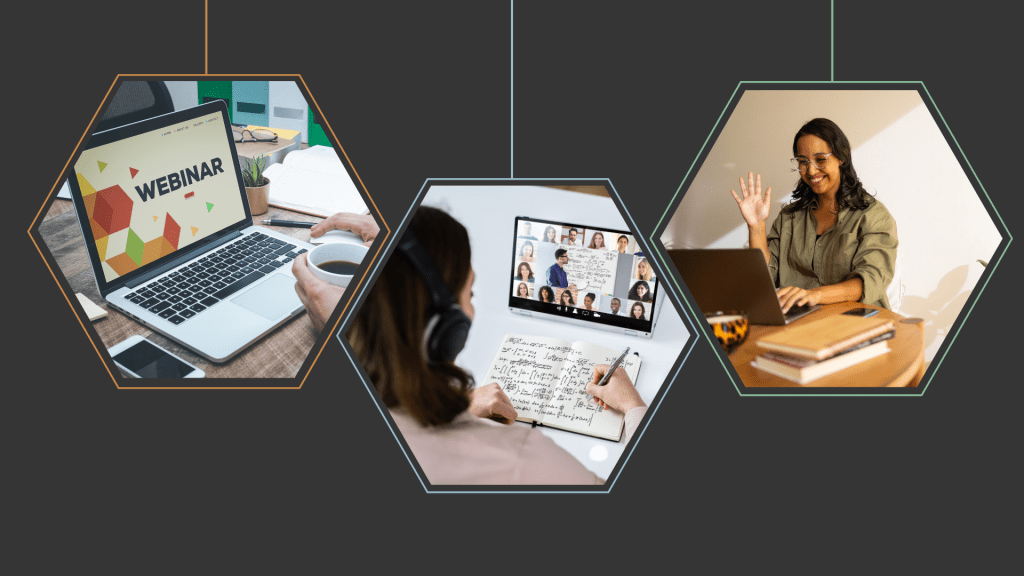
One question that frequently comes up in workplace learning is whether a session should be delivered as a webinar or as a live virtual interactive class. While both formats have their place, choosing the right one can significantly impact learner engagement and outcomes.
Start with the learning goal
The decision should not be based on convenience or technology. Instead, start with the learning objective: What should the primary learner be able to accomplish at the end of your session?
Do learners simply need information? A webinar may be the right solution.
Do learners need to change behavior, build skills, solve problems, or practice applying knowledge? A live virtual interactive session will usually provide a much stronger learning experience.
The training format should support the outcome.
When a webinar makes sense
Webinars work best when the primary goal is efficient information sharing as a scheduled event.
If learners simply need to watch a demo, understand a new process, learn about organizational changes, or gain general awareness of a topic, a webinar can be an efficient option. Webinars create a sense of occasion, which generates more momentum than an email or pre-recorded video.
Don’t need learners to interact or practice? Choose the webinar format. Webinars create time and space for learning, which benefits learners by allowing them to engage with the content without the pressure of being on video.
An often-overlooked benefit of webinars is the recording. While a webinar may be less interactive than a classroom, they can include Q&A, polls, chats and reactions, which add value to the session without being overwhelming as a recording. A well-structured webinar recording is typically much easier to consume than a recording of a highly interactive training session. Learners can focus on the presenter and content rather than listening to long periods of participant discussion, breakout activities, or technical troubleshooting.
If your objective is to create a recording that employees can watch later, a webinar format may be the better choice.

Choose a webinar format:
- When the primary goal is information sharing such as organizational updates, new policies, process changes, product launches, or awareness-building topics where learners mainly need to receive information.
- When a high-quality recording is an important deliverable because webinar recordings are typically easier to consume than recordings of interactive sessions that include participant discussions, breakout activities, and off-topic chatter.
- When reaching a large audience efficiently by delivering a consistent message to many employees at once, especially when interaction and skill practice are not critical to achieving the learning objective.
When a live virtual classroom makes sense
Interactive activities such as discussions, polls, breakout rooms, case studies, and practice exercises help learners move from understanding a concept to using it effectively on the job.

A virtual classroom works best when the learning objective requires more than simply receiving information. Unlike webinars, virtual classrooms are designed to create opportunities for active participation.
Virtual classrooms are particularly effective when learners need to apply concepts to real workplace situations, solve problems, make decisions, or develop new capabilities. Topics such as leadership development, project management, coaching, data analysis, customer service, change management, and communication skills often benefit from interactive learning experiences. Through discussions, breakout activities, case studies, simulations, and guided practice, learners can test their understanding and learn from both the facilitator and their peers.
Another advantage of virtual classrooms is the ability to address learner questions in real time. Facilitators can clarify misconceptions, adapt examples to participants’ needs, and provide immediate feedback that helps learners improve their performance. This creates a more personalized learning experience than learners typically receive through webinars.
Virtual classrooms also foster social learning. Participants gain insights from colleagues’ experiences, perspectives, and approaches to solving challenges. This peer interaction often strengthens engagement and helps learners see how concepts apply across different roles and situations.
When the goal is skill development, confidence building, behavior change, or improved job performance, a virtual classroom is often one of the most effective learning formats available.
Choose a live virtual interactive classroom when:
A live virtual classroom is often the better choice when learners need opportunities to:
- Ask questions and receive immediate feedback
- Practice new skills
- Work through realistic scenarios
- Collaborate with peers
- Reflect on their experiences
- Apply concepts to their own work
Prepare the learner
If your organization uses both webinars and virtual classroom formats, communicate the format of the session to help learners arrive with the right expectations and mindset. Adding a note on the registration page indicating whether the session is a webinar or a virtual classroom allows participants to understand their role in the experience.
Learners registering for a webinar can expect to primarily listen and learn, while those attending a virtual classroom can prepare to actively participate in discussions, activities, and practice exercises.
Setting expectations upfront can improve engagement and help learners allocate the appropriate time and attention needed to get the most value from the session.
 Acts Consultation
You must be logged in to post a comment.